
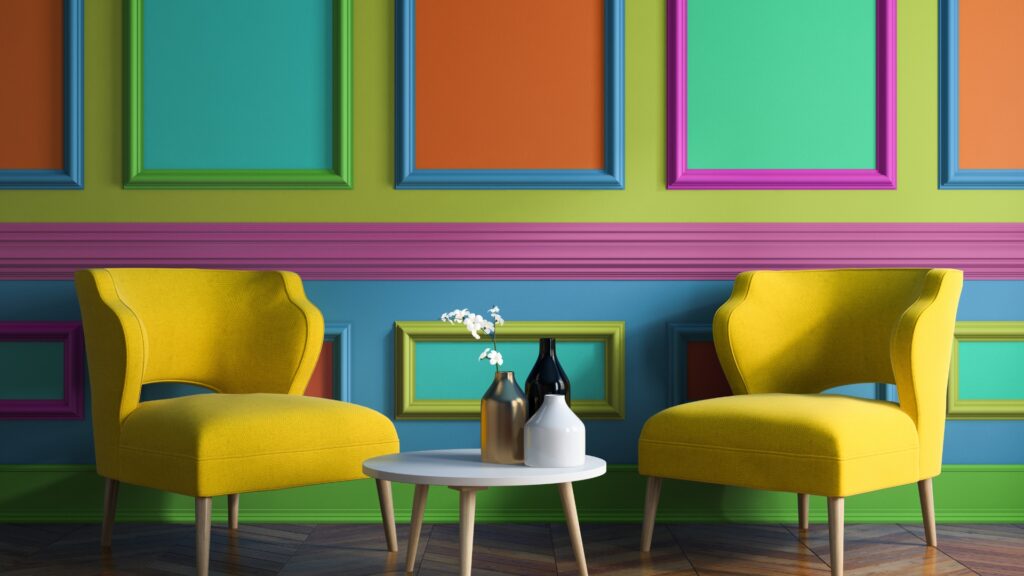
Choosing colours for your home isn’t about picking a “pretty paint.” It’s about shaping how a room feels, how it functions through the day, and how seamlessly one space flows into the next. A well-considered palette can calm a busy mind, brighten a dim corner, and make your furniture, art, and textures sing together. Here’s a practical, design-forward guide to building a palette you’ll love living with, today and for years to come.
1. Begin With Mood, Not Paint
Before you look at a single swatch, pause and picture how you want the space to feel. Do you want your living room to exhale serenity after a long day, or buzz with warm, social energy? Bedrooms usually benefit from softer, enveloping hues that promote rest; kitchens and dining areas often thrive with fresher, appetite-friendly tones; studies may need focus and clarity without harshness. When you anchor choices to mood, you naturally filter out colours that don’t align with how you want to live.
2. Read The Light And The Light Will Change Your Colour
Natural and artificial light will shift a colour more than anything else. North-facing rooms tend to cool colours down; south-facing rooms warm them up. Warm LEDs will enhance a beige tone; cool white tubes can flatten an elegant grey into something sterile. Large windows, balconies, and reflective surfaces (glossy floors, mirrors, chrome) all affect how hues appear. Always evaluate colours in your actual space at different times of day; what seems perfect at the store can feel entirely different at 3 p.m. sunlight or 8 p.m. lamplight.
3. Start With The “Givens”: Flooring, Stone, Wood, And Big Pieces
Your fixed elements like flooring, wall cladding, countertops, cabinetry finishes, and a treasured rug should lead the palette. Every material has an undertone: teak leans warm, many marbles lean cool, beige tiles can hide pink or yellow. Identify those undertones and choose wall colours that complement rather than fight them. If you already own a statement sofa or artwork, treat it as a hero and build harmony around it.
4. The Only Checklist You Need
- Define the mood for each room (calm, energizing, cozy, airy).
- Take stock of fixed elements and identify their undertones (cool, warm, neutral).
- Collect 6–8 inspiration images per room and note why you like them (lightness, contrast, texture).
- Shortlist 3–4 base wall colours that suit the light and undertones; sample them on site.
- Choose 1–2 supporting neutrals (for trims, ceilings, doors) that work across the home.
- Pick 2–3 accent colours that repeat in soft furnishings, art, or one feature wall.
- Decide on sheen levels (eggshell/matte for walls, satin/semigloss for trims) based on wear and cleaning needs.
- Test everything—paints, fabrics, finishes—together on a physical mood board in your space.
- Finalise a home-wide sequence: how each room’s palette begins, transitions, and resolves.
5. Neutrals That Aren’t Boring
Neutrals are the stage on which your textures and accents perform. But “neutral” doesn’t have to mean flat. Greige (a balanced grey-beige), stone-washed taupes, mushroom, oyster, and soft putties can add depth without shouting. Crisp white looks architectural in bright, modern spaces; off-whites with a touch of warmth feel softer and more forgiving in family rooms. When in doubt, pair a warm neutral with warm materials (oak, brass, terracotta) and a cool neutral with cool ones (chrome, marble, concrete).
6. Accents With Purpose, Not Impulse
Accents should guide the eye and support function. A deep teal behind a TV wall can reduce glare; an earthy terracotta in a dining nook adds appetite and conversation; a muted olive in a study grounds attention. If you love strong colour, use it where you want energy, entryways, powder rooms, artwork, cushions while keeping circulation areas calm. Repeating the same accent (even in different textures) across rooms creates cohesion: a thread the eye can follow from villa foyer to terrace, or from apartment living room to balcony.
7. Flow Matters: Think Home-Wide, Not Room-By-Room
The most elegant homes feel connected. That doesn’t mean every room must match; it means each space should “speak” to the next. Keep a consistent family of undertones across the house, and repeat at least one element, trim colour, metal finish, or a signature accent—throughout. In open-plan layouts, use colour temperature and saturation to zone without hard partitions: slightly deeper hues in the dining area, a lighter tone for the lounge, and a textured accent at the bar or console.
8. Sheen, Texture, And Finish Change Everything
The same colour reads differently in matte versus satin. Matte minimizes imperfections and gives a soft, contemporary look great for living rooms and bedrooms. Satin or eggshell adds a gentle bounce and is easier to clean, ideal for kids’ rooms, corridors, and apartments with heavy daily use. Semi-gloss or gloss works for doors and trims, framing your walls like a crisp collar on a tailored shirt. Don’t forget texture: limewash, venetian plaster, micro-cement, or textured wallpapers introduce light-play and depth without relying solely on colour.
9. Test Like A Professional
Never judge a swatch the size of a postage stamp. Paint at least A3-sized samples directly on your wall or use large sample boards you can move around. Look at them morning, noon, and night; under downlights and beside windows; with curtains open and closed. Stand back across the room and view adjacent walls at once to check for harmony. If a colour consistently looks a touch too cool, try shifting warmer by one step often that’s all it takes.
10. Practical Pointers For Indian Homes And Climate
In hotter regions or west-facing rooms, colours can skew warmer and feel more intense; consider lighter, dust-friendly neutrals and breathable matte finishes. In coastal or humid cities, choose mould-resistant paints for kitchens and baths and prefer satin sheens where wipe-ability matters. For city apartments that battle dust and pollution, mid-tone walls hide marks better than stark white. Balconies and terraces come alive with botanical greens and clay shades that connect seamlessly to plants and landscape.
11. Colour and Wellbeing
Colours can support how you use a room. Soft blues and blue-greens encourage rest in bedrooms; complex greens feel restorative in living areas; gentle clays and blushes add warmth without overstimulation; balanced greys support focus in workspaces when layered with timber and warm metals. If you’re sensitive to visual noise, limit high-chroma colours to small, joyful touches and let layered neutrals do the heavy lifting.
12. Avoid These Common Traps and Fix Them Gracefully
Two pitfalls crop up again and again: choosing in isolation and chasing trends. A paint chosen without the context of flooring, fabrics, and light ends up feeling “off” even if it’s beautiful on its own. And while trend colours can be fun, anchoring your home to them can date it quickly. The fix is simple: build your palette from your materials and lifestyle first, then sprinkle trend tones through easily swappable décor—throws, cushions, art—so you can refresh without repainting.
13. Small Spaces, Big Intelligence
For compact apartments, continuity is your friend. Use one main wall colour across the majority of the home to create visual expansion, and introduce variation through texture (ribbed panels, woven rugs, slatted wood) and tonal shifts (a half-shade deeper in niches, a half-shade lighter on ceilings). Mirrors and metallic accents bounce light; slim black lines (window frames, lamps) add definition without heaviness.
14. Bringing It All Together
A perfect palette is less about rules and more about relationships: between light and shadow, materials and mood, rooms and routines. Start with feeling, respect your fixed elements, test in real light, and let a handful of thoughtful accents add character. The result is a home that looks composed and feels unmistakably yours whether it’s a sun-washed villa with garden views or a sky-high apartment with a city skyline.
Conclusion
Choosing the right colour palette is about more than decorating walls, it’s about creating harmony, enhancing your lifestyle, and shaping how each space makes you feel. By grounding your choices in mood, light, and existing elements, you ensure your interiors remain timeless and welcoming. Colours have the power to soothe, energise, and connect spaces, turning a house into a home that reflects your personality. With thoughtful planning and a touch of creativity, your palette will not only look stunning today but will continue to enrich your life for years to come.