
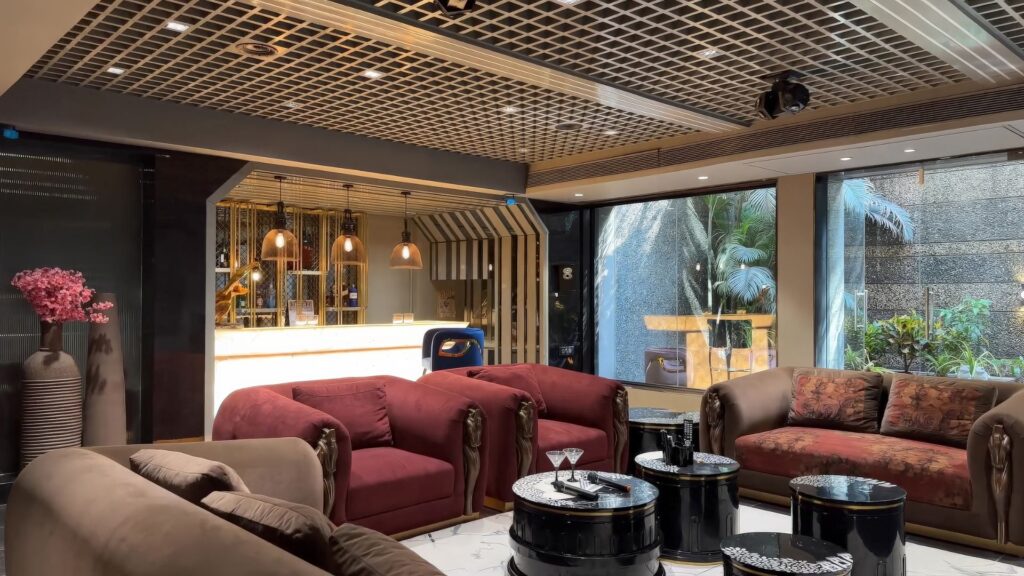
In the realm of contemporary luxury villas, true opulence extends far beyond visual aesthetics. It encompasses a complete sensory experience, and increasingly, that experience is defined by tranquillity. Acoustic design the science of controlling and enhancing sound within a space, is no longer a mere technical detail but a cornerstone of high-end architectural planning. Creating a truly peaceful sanctuary requires meticulous attention to soundproofing and sound management, ensuring the home offers both a private, quiet retreat and an optimal environment for entertainment. For discerning homeowners, integrating advanced acoustic principles into the villa interior is the ultimate expression of care and quality.
The New Standard of Luxury: Sensory Comfort
The modern world is characterised by constant noise. Traffic, conversation, media, and mechanical systems all contribute to a cumulative soundscape that can be mentally and physically draining. In a luxury villa, the expectation is a complete escape from this auditory fatigue.
Poor acoustics manifest in several ways:
- Echo and Reverberation: Hard surfaces reflect sound, causing prolonged echoes that make speech unclear and environments feel cold or sterile.
- Noise Transmission: Sound penetrating walls, floors, and windows from outside or between different rooms (e.g., a home theatre disturbing a bedroom).
- System Noise: Audible HVAC systems, plumbing, or elevator operation that disrupts the home’s peace.
Superior acoustic design combats these issues, transforming the villa interior into a cocoon of comfort. It supports wellness, enhances focus, and elevates the enjoyment of every space, from a private office to a grand living area.
Strategic Soundproofing: Blocking the World Out
Effective soundproofing is the defensive layer of acoustic design. It focuses on isolating the home from external noise and creating privacy between internal zones. This requires strategic material selection and structural modification implemented early in the building phase.
Architectural Soundproofing Techniques:
- Acoustic Glazing: Windows are often the weakest link in the sound barrier. Premium luxury villas utilize multi-layered, laminated acoustic glass. The specialized interlayer (often PVB) dampens sound vibrations, significantly reducing the transmission of external traffic, aircraft, or neighbourhood noise without sacrificing views or natural light.
- Mass and Decoupling: Sound waves struggle to pass through high-mass structures. Using denser materials for walls (such as concrete, brick, or multiple layers of drywall) forms the primary barrier. More advanced methods involve decoupling, where two wall surfaces are structurally separated by an air gap or specialized clips/resilient channels. This prevents sound energy from vibrating one wall and transferring that vibration to the other, dramatically improving internal privacy and noise containment.
- Isolation Floors and Ceilings: To prevent impact noise (footfalls, dropped objects) and airborne noise from traveling between floors, isolation systems are crucial. These may include a floating floor system where the finished floor rests on a resilient layer or dampeners, completely isolated from the concrete slab or utilizing acoustic mats and specialized insulation in the ceiling voids.
These rigorous soundproofing techniques ensure that the tranquility within your private retreat remains undisturbed, regardless of the activity happening just outside or even in the adjacent room.
Absorption and Diffusion: Sculpting the Internal Soundscape
Once external noise is managed, the focus shifts to internal sound quality. This involves controlling reflectionsthat cause echo and poor audio clarity through strategically integrated acoustic design elements seamlessly integratedinto the villa interior.
Aesthetic Acoustic Treatments:
- Discreet Absorption Materials: Traditional acoustic panels can be visually intrusive. In luxury villas, absorption is achieved through high-end materials that double as design features:
- Perforated Wood Panels: These can be used as wall cladding or cabinet fronts. The precisely drilled holes trap sound waves, offering excellent absorption while maintaining a sleek, architectural look.
- Fabric-Wrapped Panels: Custom-sized and wrapped in premium textiles (like velvet, silk, or wool), these panels are visually indistinguishable from luxury upholstery or wall padding.
- Soft Furnishings: Heavy, plush carpets, floor-to-ceiling drapery, and thick upholstered furniture act as natural, aesthetic sound absorbers, particularly for mid-to-high frequencies.
- Sound Diffusion: For dedicated listening spaces like home theaters or large entertainment rooms, diffusion is essential. Diffusers scatter sound waves randomly, preventing echo but keeping the room “live.” This is often achieved through architectural wall reliefs, custom-built shelving with varied depths, or specialized wooden grilles that are integrated as sculptural elements in the villa interior design.
- Mechanical System Isolation: A critical component of acoustic design is quieting the mechanical systems. This involves isolating compressors, pumps, and air handling units (AHUs) in dedicated, soundproof rooms, using flexible connectors for ductwork, and employing low-velocity HVAC systems to minimize air rush noise at the vents.
The Ultimate Expression of Luxury
The meticulous integration of acoustic design and soundproofing transforms a large, beautiful house into a sophisticated, comfortable home. It ensures that the peace you seek is a physical reality, not just a design aspiration. The synergy between high-end materials, architectural innovation, and precise acoustic engineering is what defines the next generation of luxury villas. It’s the assurance of crystal-clear music, distraction-free work, and the simple, profound quiet that allows one to relax truly.
Ultimately, the mastery of the soundscape, executed subtly and flawlessly within the architectural framework, is the hallmark of true luxury interior design.