
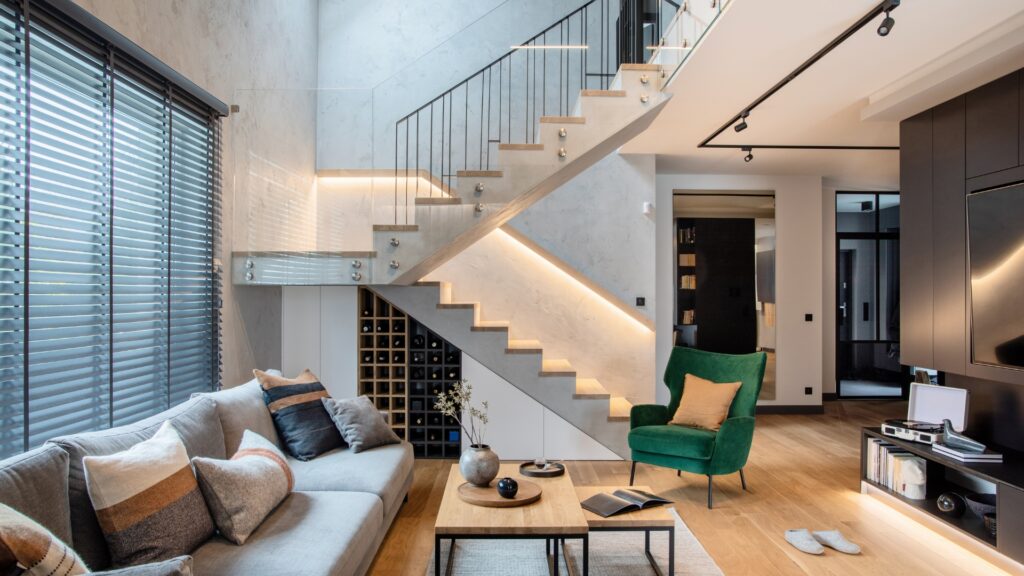
Double-height living areas are the ultimate statement of luxury and openness in modern homes. These spaces feature ceilings that extend two stories high, creating a sense of grandeur and airiness that a standard ceiling can never match. From villas and bungalows to penthouse apartments, double-height spaces have become a defining element of contemporary architecture.
But like every design trend, they come with both advantages and challenges. If you are considering a double-height living area for your home, here’s an in-depth look at the benefits and drawbacks to help you make an informed decision.
What Is a Double-Height Living Area?
A double-height living room typically features a ceiling that is twice the standard height, often ranging from 18 to 22 feet, compared to the conventional 9–10 feet. This architectural choice is most commonly seen in living rooms, entry foyers, and sometimes dining spaces.
The design creates a striking visual impact and allows for dramatic design elements such as oversized chandeliers, tall windows, and large wall art. However, these expansive spaces also demand thoughtful planning to ensure comfort, acoustics, and energy efficiency.
Why Are Double-Height Spaces Popular Today?
Modern homeowners are drawn to double-height living areas because they exude luxury and openness. In urban homes where square footage is limited, vertical volume creates the illusion of a larger space. For villas, these areas serve as central showpieces that set the tone for the entire home.
This trend aligns with the growing desire for homes that feel light-filled, airy, and connected to nature owing to large windows and visual continuity between floors.
Key Benefits of Double-Height Living Areas
Here’s where these architectural wonders truly shine:
- Expansive Sense of Space
Double-height ceilings instantly make a room feel larger and more luxurious, even if the floor area is modest. - Abundant Natural Light
Large windows or glass walls are often paired with double-height spaces, flooding interiors with sunlight and reducing the need for artificial lighting during the day. - Improved Visual Drama
These spaces are ideal for bold design statements—grand chandeliers, oversized art pieces, or feature walls that become conversation starters. - Better Ventilation
Hot air rises, and double-height spaces can improve air circulation, making the home feel fresher when paired with ceiling fans or cross-ventilation. - Sense of Connectivity
If designed with open railings or glass balustrades, the upper and lower floors feel visually connected, promoting interaction between family members across levels.
The Drawbacks You Need to Consider
While double-height living areas look stunning, they are not without challenges. Ignoring these can lead to discomfort, maintenance headaches, and unexpected expenses.
1. Temperature Regulation Can Be Tricky
The larger the volume, the harder it is to maintain uniform temperature. In summer, cooling these spaces requires more energy; in winter, heating them is equally demanding. This can lead to higher electricity bills unless proper insulation, energy-efficient glazing, and ceiling fans are incorporated.
2. Acoustic Issues
Sound behaves differently in double-height rooms: conversations echo, and noises travel more easily between floors. Without sound-absorbing materials like carpets, curtains, or acoustic panels, you might experience unwanted reverberation.
3. Maintenance Challenges
Cleaning tall windows, changing light fixtures, or repainting walls in a double-height room requires scaffolding or special ladders. Routine tasks like dusting ceiling fans or maintaining chandeliers become complex and time-consuming.
4. Higher Construction and Furnishing Costs
The grandeur comes at a price. From additional structural reinforcement to expensive custom curtains and larger light fixtures, double-height spaces increase the budget significantly.
5. Loss of Usable Floor Area
Every foot of vertical volume is floor space you could have used for an extra room, study nook, or storage. This trade-off may not make sense for smaller homes where every square foot counts.
Design Tips to Maximise Benefits and Minimise Drawbacks
- If you’ve set your heart on a double-height living area, smart planning can help you enjoy its beauty without the drawbacks overshadowing the experience.
Start by installing energy-efficient glazing to regulate heat gain and loss through the large windows, ensuring comfort in all seasons. For privacy and better sunlight control, opt for layered curtains or motorised blinds that are easy to operate. - To tackle the common issue of sound echoing, incorporate acoustic panels, plush rugs, and upholstered furniture to absorb noise and create a more balanced acoustic environment.
- Maintaining airflow is equally important, so adding ceiling fans or air circulators can help reduce dependence on air conditioning while improving comfort. When it comes to aesthetics, choose neutral wall colours to keep the space feeling open and airy without appearing overwhelming.
- Finally, plan for easy maintenance by integrating features like a catwalk, retractable ladders, or modular lighting fixtures that make cleaning and upkeep hassle-free.
Double-Height Spaces in Villas vs Apartments
In Villas
Double-height living rooms in villas often integrate with open staircases, mezzanines, and large glass façades overlooking gardens or courtyards. These designs enhance the sense of openness and connection with nature.
In Apartments
Duplex or penthouse apartments may feature double-height areas in living or dining zones. However, privacy and sound insulation become more critical here due to closer proximity to neighbours.
Are Double-Height Spaces Worth It?
The answer depends on your lifestyle, budget, and design priorities. If you love open spaces, abundant light, and architectural drama, and you are prepared for higher costs and maintenance, double-height living areas can be a dream come true.
However, if you prioritise energy efficiency, acoustic comfort, and practical storage, you may want to explore alternatives like partial double-height zones or vaulted ceilings for a similar effect without the full commitment.
Conclusion
Double-height living areas are not just a design choice. They are a lifestyle statement. They can transform an ordinary home into an extraordinary one, but they demand thoughtful planning to ensure comfort, efficiency, and functionality.
If you’re considering this feature for your new home or renovation, consulting an expert is essential to strike the right balance between aesthetics and practicality. At Space Techniques, we specialise in creating stunning, functional spaces that reflect your personality while delivering comfort and sustainability. Let’s make your dream home a reality—beautiful from every angle and every height.